

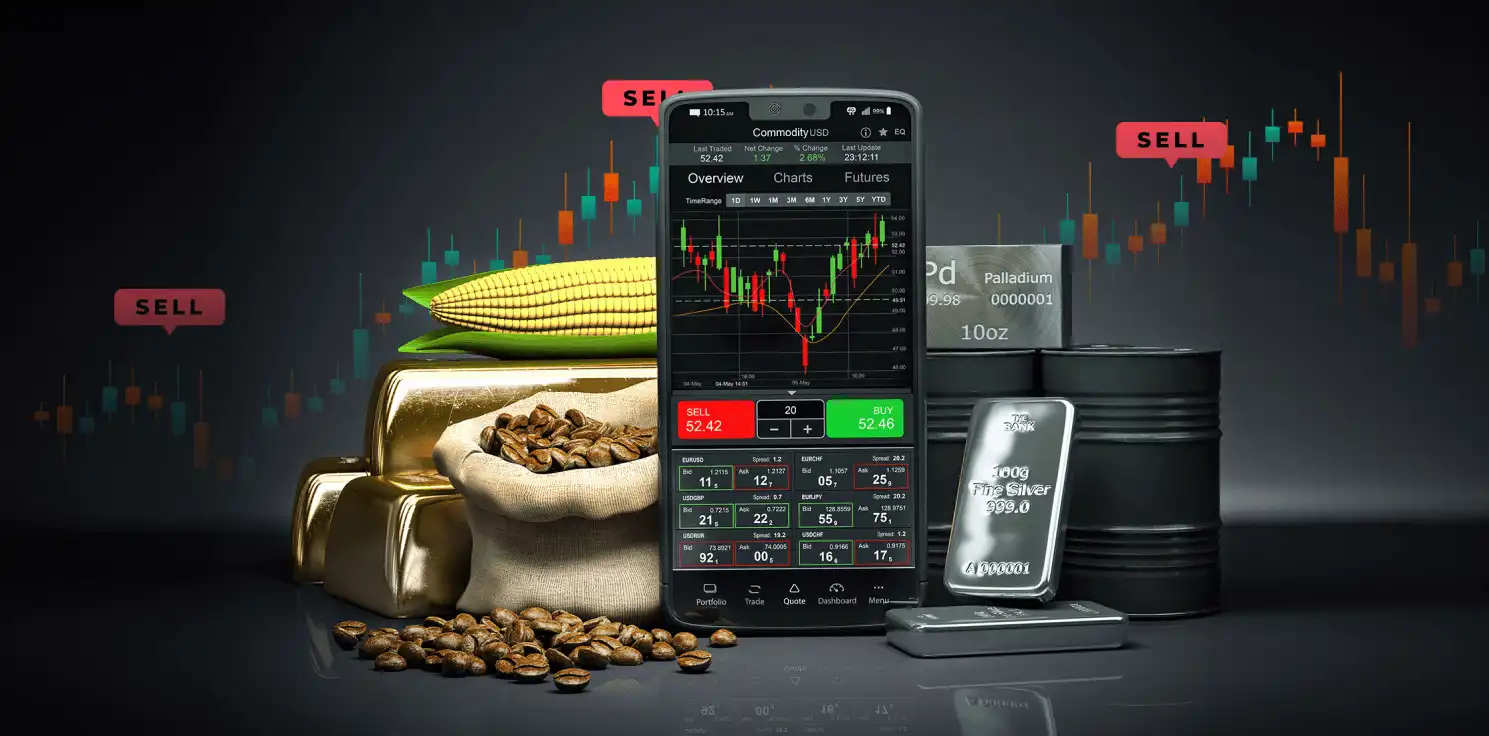
Commodities are often treated as reactionary markets. Prices appear to move in direct response to visible catalysts such as supply disruptions, geopolitical tension, weather conditions, or inventory data. This creates the belief that commodity trading is about reacting quickly to information and positioning aggressively when a narrative becomes clear. In reality, this reactive mindset is one of the main reasons traders struggle to remain consistent in commodity markets.
Unlike purely technical or sentiment-driven instruments, commodities are shaped by layers of structural forces that operate on different timelines. Physical supply chains, storage constraints, transportation costs, seasonal cycles, and institutional hedging activity all influence price long before a headline reaches the screen. By the time information becomes public, price is often already positioned for it. What follows is not a clean continuation, but a period of adjustment as expectations are repriced.
This is where reaction-based trading fails. Traders enter positions assuming that the visible catalyst is the cause of the move, when in fact it is often the excuse. Price reacts violently not because something happened, but because positioning was already imbalanced. The initial move is frequently followed by sharp retracements, erratic volatility, or prolonged consolidation. Traders who commit fully to a single narrative are quickly forced into defensive decisions.
Commodities are particularly unforgiving to rigid execution. Sudden spikes, abrupt reversals, and irregular intraday ranges are normal behavior, not anomalies. These movements are driven by liquidity shocks and order flow adjustments rather than technical invalidation. When traders treat every adverse movement as a mistake, emotional pressure escalates rapidly. The problem is not volatility itself, but the lack of structural tolerance for it.
Another challenge in commodity trading is asymmetry of information. Large participants often hedge exposure weeks or months in advance, while retail traders operate on short-term signals. This mismatch creates price behavior that appears irrational from a short-term perspective. Moves stall unexpectedly, trends pause without warning, and reversals occur without clear confirmation. Traders who rely on immediate feedback from price are repeatedly destabilized.
Single-position exposure amplifies these issues. When a trade depends entirely on uninterrupted continuation, any deviation from expectation feels threatening. Commodities rarely move in straight lines. They explore levels, test liquidity, and revisit zones before committing to expansion. Without structural protection, traders are forced to intervene emotionally, often exiting trades that later resolve as anticipated.
Professional execution in commodities prioritizes exposure design over narrative conviction. The goal is not to predict outcomes perfectly, but to remain engaged while price completes its natural process. Structured frameworks that balance directional intent with protective positioning allow traders to withstand volatility without abandoning valid ideas. This philosophy is reflected in professional short-term execution models such as the Trading HEDGE Strategy, which is built to manage early instability and psychological pressure rather than eliminate them.
Commodities reward traders who accept uncertainty as part of the trade. Those who chase certainty through headlines, forecasts, or aggressive positioning are repeatedly destabilized. Those who design their exposure to absorb shocks and delay judgment are able to operate consistently even in erratic conditions.
Commodity markets do not punish ignorance immediately. They punish rigidity over time. Traders who expect clean cause-and-effect relationships become frustrated and reactive. Traders who understand that price moves through imbalance, adjustment, and resolution phases gain clarity where others see chaos.
Commodities are not difficult because they are unpredictable. They are difficult because they expose the limits of reaction-based trading. Structure, not speed, determines survival.
